
Caribou County Arrest Records and Court Charges
Caribou County arrest records are law-enforcement records connected to an arrest, booking, custody status, or jail contact. The court charge record is different. It begins when the prosecutor files a complaint, information, amended charge, or other charging document with the court. A single arrest can lead to no filed charge, one filed charge, several charges, later amendments, a dismissal, a plea, or sentencing. The jail and sheriff side helps answer whether a person is in custody; the court side answers what formal charges were filed and what happened to them.
Sheriff J. Adam Mabey oversees the Caribou County Sheriff's Office, including patrol, communications, and detention operations. The sheriff's office is at 475 East 2nd South in Soda Springs, with the main office at (208) 547-2561 and jail booking desk at (208) 547-3094. For current custody or booking status, use the jail contacts and inmate records. For the full court case after charges are filed, use criminal court records.
Caribou County's official source set does not support promising a public mugshot database or an online arrest blotter. The supported route is narrower and more reliable: use sheriff or jail contacts for booking and custody, use Idaho iCourt for filed charge information, and use the clerk when a charging document, docket entry, disposition order, or certified copy is needed.
The sheriff biography at caribousheriff.com identifies Sheriff J. Adam Mabey and the countywide law-enforcement role of the office.
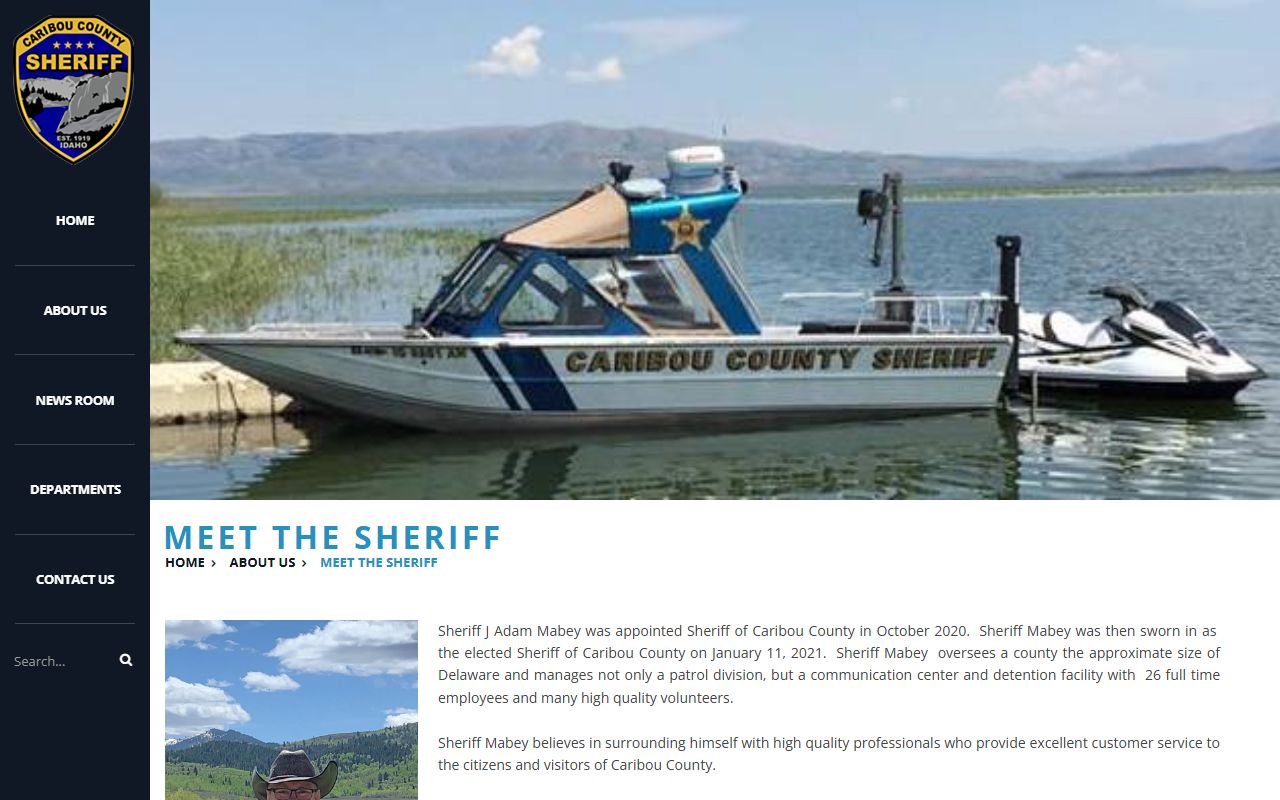
That sheriff context belongs on an arrest-record page because arrest and booking records start with law enforcement before any formal court charge is filed.
How to Find Caribou County Arrest Records and Charges
There is no official public Caribou County jail roster or online arrest-record database in the reviewed sheriff pages. For booking status, call the jail booking desk at (208) 547-3094, the front office at (208) 547-2561, or dispatch/non-emergency at (208) 547-2561 or (208) 547-2563. For charges filed after arrest, use Idaho iCourt to search the public criminal case summary, then request copies from the clerk if the portal does not show the needed filing.
- For custody or booking status, call the Caribou County Jail booking desk or use VINE custody notification where appropriate.
- For formal court charges, open Idaho iCourt and search by defendant name or case number.
- Open the matching case and read the charge list, statute, level, bond entry, and current status.
- Check whether each charge is pending, amended, dismissed, pleaded to, sentenced, or tied to a warrant event.
- Request a copy from the Caribou County clerk when the charge document or disposition order is needed.
The sheriff contact page at caribousheriff.com/contact_us provides the official phone channels for the front office, dispatch, and jail booking desk.
Those phone channels are the practical fallback because the source set did not verify a public online arrest or jail roster for Caribou County.
How Charges Get Filed After an Arrest: Complaint, Information, and Indictment
The arrest does not by itself prove that a charge was filed or that a person was convicted. After law enforcement forwards a matter, the prosecutor decides what formal accusation to file. A complaint can start a misdemeanor case or begin felony proceedings. A felony may later proceed by information after preliminary proceedings. An indictment is a grand-jury charging document. The court charge record tracks these filings, amendments, hearing settings, bond orders, and outcomes.
| Complaint | Information | Indictment | |
|---|---|---|---|
| Filed By | Officer or prosecutor depending on case path | Prosecutor | Grand jury process |
| Common For | Misdemeanors and initial felony proceedings | Many felony cases after preliminary proceedings | Serious or grand-jury matters |
| Starts | Court charging record | Formal felony prosecution | Grand-jury-based prosecution |
The Caribou County dispatch page at caribousheriff.com/departments/dispatch describes the public safety answering point for Soda Springs and surrounding communities.
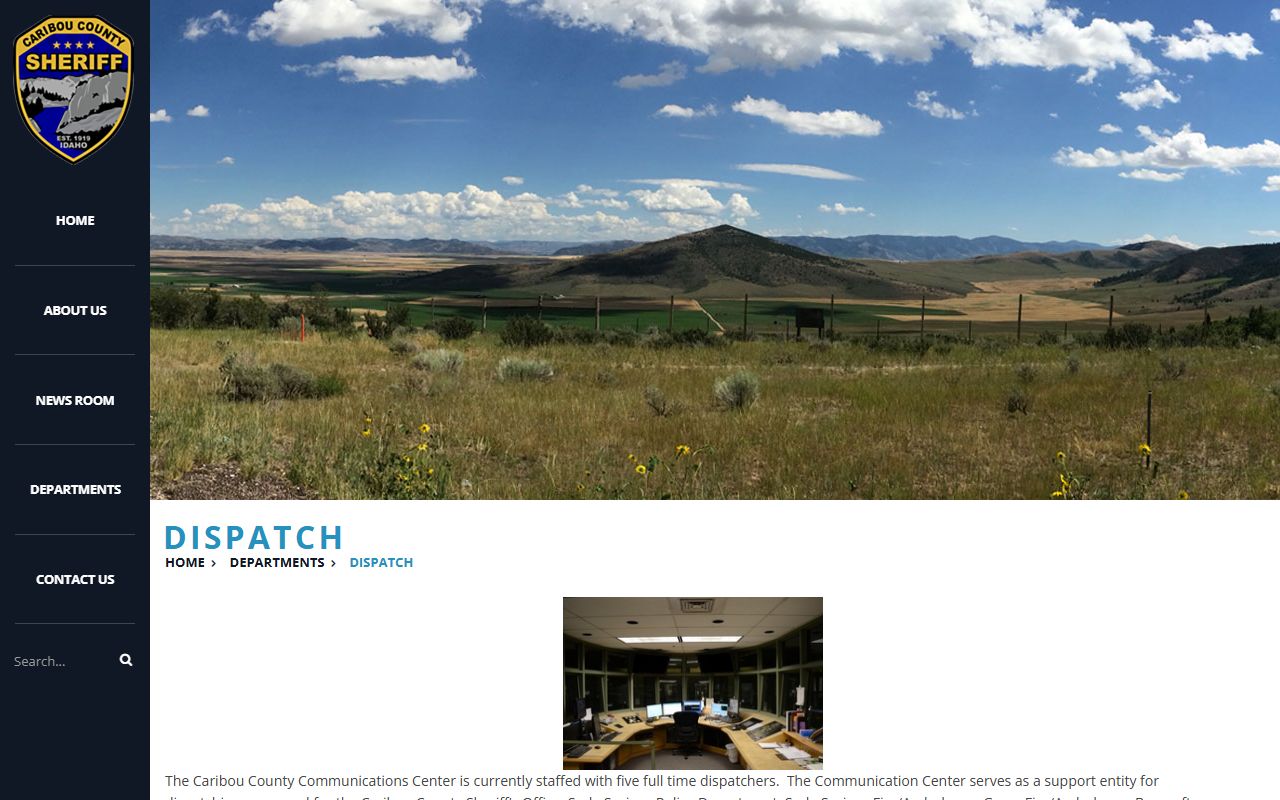
Dispatch is part of the law-enforcement response chain, while the charge record is created later through prosecutor and court filings.
Charge Status and What It Means
Charge status changes as a case moves through court. A charge can be pending after filing, amended to a different statute or severity level, reduced during plea negotiation, dismissed by the court, dismissed by the prosecution, or resolved by plea, verdict, or sentence. Always read the final disposition for each count rather than assuming that the first charge listed is the final result.
| Status | What It Means |
|---|---|
| Pending | The charge is filed and no final public disposition has been entered for that count. |
| Amended / Reduced | The filed charge changed, often to a different statute, severity level, or factual allegation. |
| Dismissed | The court or prosecutor ended that charge; check whether dismissal was with or without prejudice. |
| Plea / Sentenced | The case resolved by plea and the court entered sentence terms, financial obligations, probation, or other conditions. |
The Soda Springs Police Department contact page at sodaspringsid.com lists local police office and dispatch contact information.
City police information can help identify the investigating agency, but filed charges and outcomes still need to be confirmed through the court record.
Charges vs. Convictions
Being charged is not the same as being convicted. A charge is a formal accusation that starts or advances a criminal case. A conviction is an outcome after a guilty plea, verdict, or other qualifying adjudication. Arrest records and court charges should be read with the disposition and sentence, especially where charges were amended, dismissed, or resolved under Idaho withheld-judgment provisions.
| Charge | Conviction | |
|---|---|---|
| Stage | Accusation after arrest or citation | Case outcome after plea, verdict, or adjudication |
| Burden of Proof | Begins from probable cause and filing decision | Requires proof beyond a reasonable doubt or a qualifying plea |
| Public Record | Often public unless sealed or restricted | Often public unless sealed, shielded, juvenile, or restricted |
Sealed vs. Expunged Records
Idaho Clean Slate shielding can hide eligible records from ordinary public disclosure after at least five years from completion of sentence, including probation, parole, fines, and restitution. Shielding does not destroy the record. Juvenile charges, sealed warrants, victim-protection information, mental-health records, protected addresses, and minor information can also be restricted. Expungement should not be used as a general label for every record that disappears from public view.
| Sealed or Shielded | Expunged | |
|---|---|---|
| Visibility | Hidden from ordinary public disclosure | Destroyed or removed only when Idaho law specifically provides |
| Law Enforcement | May remain available to authorized users | Depends on statute and order |
| Eligibility | Requires rule-based or statutory process, such as Clean Slate | Narrow, not automatic for adult criminal charges |
Charge Codes and Severity Levels
Charge entries may identify the statute, offense title, severity, filing date, offense date, bond, and status for each count. Idaho magistrates handle misdemeanors, infractions, and preliminary felony matters. District judges handle felony trials and sentencing after the case proceeds from the magistrate division. One arrest can produce multiple counts, and each count can have a separate outcome.
The same case can also contain non-charge terms that affect how the record should be read, including bond conditions, no-contact orders, probation terms, restitution, fines, and payment status. Those entries are part of the court case record, but they should not be mistaken for new charges unless the docket or charging document identifies a separate count.
Statewide Charge and Criminal History Lookups
For court case information, use Idaho iCourt. For statewide correctional status, use IDOC Resident/Client Search when the person may be under Idaho Department of Correction jurisdiction. IDOC results can show statuses such as in custody, in community, discharged, or Active Bench Warrant for people in that system. For public-record requests to the sheriff, Idaho Code § 74-103 provides the ordinary three-working-day response framework, but law-enforcement records can be redacted or withheld when an exemption applies.
For statewide court party verification, Idaho Judicial Branch points users to its public background-check party-verification channel. That tool is not the same as a commercial background check and should be read with court dispositions, shielding rules, and any restricted-record limits. The court file remains the best source for the actual charge history and final outcome.
The Caribou Sheriff civil division page at caribousheriff.com/departments/civil explains local civil process service and the county service area.
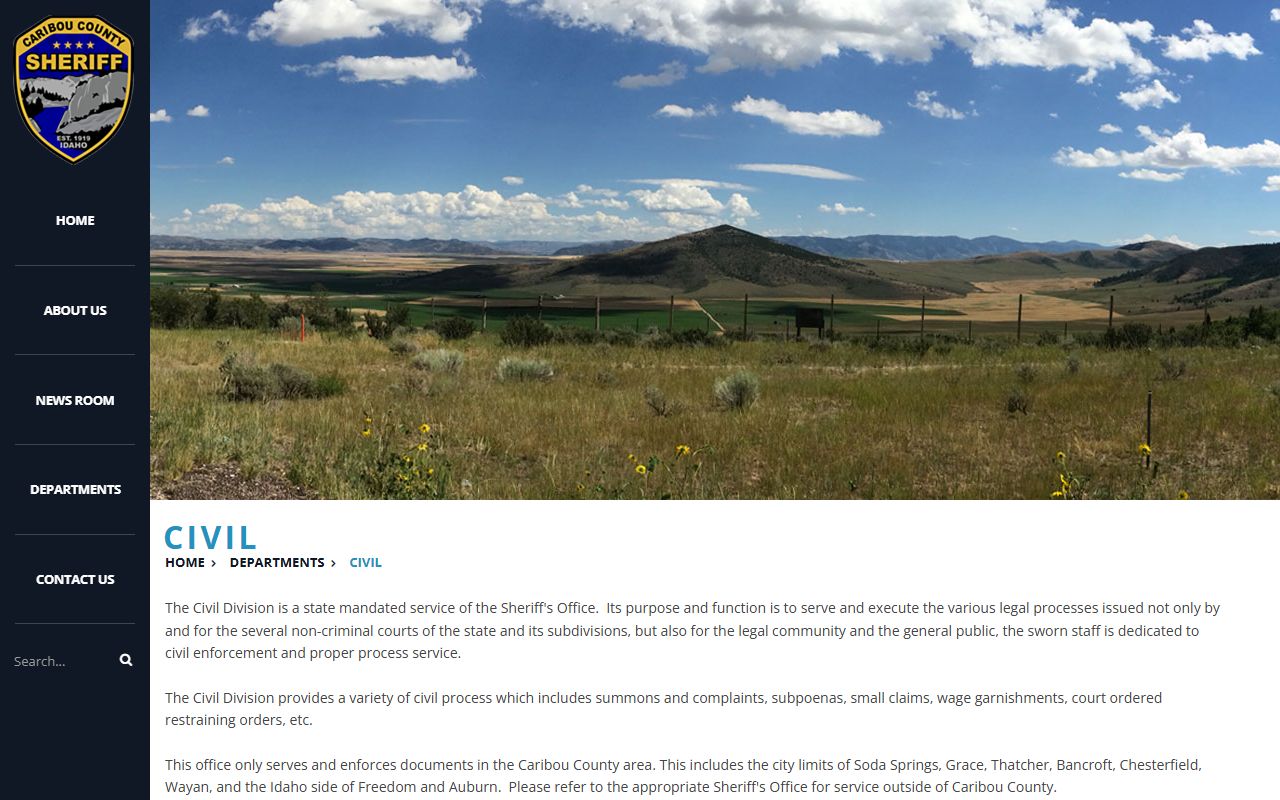
Civil process is not the same as a criminal charge, but the sheriff's service area helps explain countywide law-enforcement and court-service boundaries.
Background Check Considerations
A public arrest or charge lookup is not an FCRA-compliant employment, housing, credit, or insurance background check. Records can be incomplete online, updated after a delay, sealed, shielded, or misread if the first charge is confused with the final disposition. Anyone making a legal or regulated decision should obtain the official case record from the court and follow the rules that apply to the decision being made.
Important: Arrest and charge searches should not be used as consumer reports for FCRA-regulated decisions.
Restricted Charge Records in Caribou County
Restricted charge records can include juvenile matters, sealed cases, sealed search warrants, protected victim information, protected addresses, medical or mental-health details, and minor information in family or protection-order contexts. Active investigations can also limit access to law-enforcement records. When iCourt does not show a record, use the clerk, court, sheriff, or jail channel that matches the record type instead of assuming the record does not exist.